 Guide
GuideWhy Avatar TTS is Better Than Voice TTS in 2026
TL;DR
Voice TTS has never sounded better. But in 2026, users don't just want to hear — they want to see and interact.
Why settle for voice-only when you can deliver a complete digital human experience?
Avatar TTS (text-to-speech with AI avatars) combines voice, facial expressions, and visual presence — a fundamentally more engaging communication layer than audio alone.
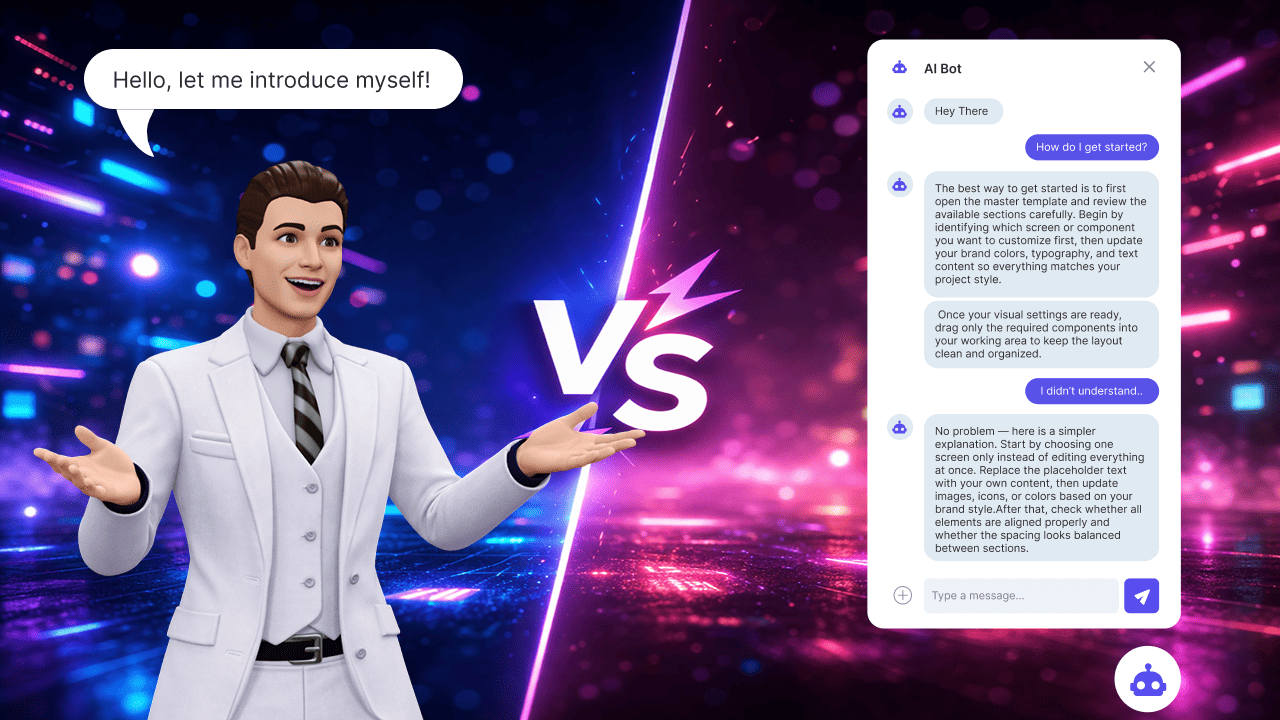
Voice TTS vs Avatar TTS
Voice TTS
Audio output only. Realistic voices, but no visual cues — easy to ignore, hard to engage with.
Avatar TTS
Speech + lip sync + expressions + eye contact. Users feel like they're talking to a person, not a system.
How Streamoji powers Avatar TTS
Real-Time Facial Tracking
ARKit-standard 52 blendshapes capture eyebrows, eyes, mouth shapes, and head motion instantly.
Accurate Lip Sync
Oculus Visemes provide precise voice-to-mouth synchronization for natural conversations.
1. Higher Engagement
Human attention is visual-first. A face speaking directly to you holds attention far longer than a disembodied voice — improving interaction time and content completion.
2. Feels More Human
Avatar TTS combines facial expressions, lip sync, eye contact, and subtle movement. Users feel like they're interacting with a person — not a playback system.
3. Better Understanding & Retention
Communication isn't just hearing — it's seeing and interpreting. Visual cues reinforce tone and guide attention.
- •Lip movement via Oculus Visemes for clarity
- •52 ARKit expressions to reinforce tone
- •Visual cues that guide user attention
4. More Scalable Than Video
Traditional video is expensive and slow to update. Avatar TTS generates video-like content instantly — change scripts without re-recording.
5. Real-Time Interaction
Voice TTS is mostly one-way. Avatar TTS enables two-way conversations — avatars respond to input, answer questions, and hold dynamic dialogues. Streamoji streams live avatars with real-time facial tracking.
The Verdict
Avatar TTS isn't a minor upgrade — it's a fundamental shift from passive listening to active engagement. As users expect more natural, human-like AI interactions in 2026, Avatar TTS is becoming the new standard.
Bring your avatars to life with TTS
Ship production-ready avatars in weeks — not months.
Avatar TTS vs voice TTS: FAQs
What is the difference between Avatar TTS and voice TTS?
Voice TTS converts text to audio only. Avatar TTS adds a visible digital face with lip sync and expression, so users both hear and see the speaker.
Why is Avatar TTS better for engagement in 2026?
Visual presence improves attention, trust, and comprehension versus audio-only bots. Users treat expressive faces more like a conversation than a disembodied voice.
When is voice-only TTS still enough?
Voice-only TTS still fits hands-free contexts, accessibility audio tracks, and simple notifications where a face adds little value or bandwidth is extremely constrained.
Does Avatar TTS require more bandwidth?
Naive video streams do, but modern platforms stream facial animation efficiently. Streamoji targets roughly 40 kbps-style delivery so Avatar TTS can run on the web and mobile without full camera video.
Can I upgrade from voice TTS to Avatar TTS?
Yes. Keep your speech pipeline and add an avatar layer for lip sync and rendering, or use a platform that bundles Avatar TTS with SDKs for web and apps.
Is Avatar TTS useful for customer support?
Yes. Support and onboarding agents that speak with a face often feel clearer and more human than voice-only IVR or text chatbots, especially for complex explanations.
Recommended for You
Continue exploring avatar platforms and AI interaction trends.

The Latest Trends in Avatar TTS Technology (2026)
Avatar TTS has become a full sensory experience—combining hyper-realistic AI voices, expressive digital faces, and real-time lip synchronization.

Web-Based 3D Avatars: The Future of Digital Interaction in 2026
Browser-native 3D avatars are the next interface layer for websites and apps — real-time, no install, and powered by platforms like Streamoji at ~40 kbps.